- This topic is empty.
-
AuthorPosts
-
-
March 25, 2026 at 3:14 am #11737
Kris Marker
KeymasterWe post news and comment on federal criminal justice issues, focused primarily on trial and post-conviction matters, legislative initiatives, and sentencing issues.

6th CIRCUIT EXPANDS ABILITY TO CHALLENGE FELON-IN-POSSESSION CONSTITUTIONALITY
Bo Hostettler is not a quick learner. After doing 48 months in prison for being a felon in possession of a gun, a violation of 18 USC § 922(g)(1), Bo got caught while on supervised release with, you guessed it, a gun.
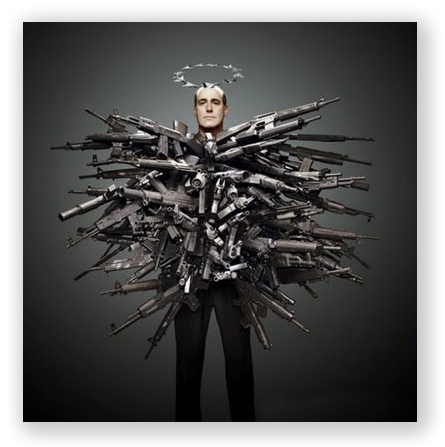 Charged again as a felon in possession, Bo argued that 922(g)(1) violated his 2nd Amendment rights, both on its face and as applied to his circumstances. His District Court agreed and dismissed the charges.
The Government appealed to the 6th Circuit. While the appeal was pending, the Circuit re-examined its 2nd Amendment jurisprudence in light of Bruen and Rahimi. The result of that was United States v. Williams, a 2024 decision in which the 6th upheld § 922(g)(1)’s constitutionality “on its face and as applied to dangerous people. However, we explained that when the government disarms people on a class-wide basis, like it does for felons under § 922(g)(1), individuals must have a reasonable opportunity to prove that they don’t fit the class-wide generalization.”
The Williams court focused on the defendant’s prior convictions for aggravated robbery and attempted murder as “most probative of the defendant’s dangerousness... because they require violence against another person [and] provide at least strong evidence that the individual is dangerous. But even where a defendant has committed those types of crimes, we recognized that 922(g)(1) might be susceptible to an as-applied challenge depending on the unique circumstances of the offenses committed.”
In Bo’s case, the 6th said, the burden lies with him to show he is not dangerous. The district court must consider hisentire criminal history, not just his felony convictions; and the fact that he was caught with a gun while on supervised release is “potentially relevant.”
 The government argued that Bo’s criminal history recited in his Presentence Report was sufficient to prove Bo was dangerous. But the Circuit said that the PSR criminal history contained no information about the underlying circumstances or details of his criminal conduct in those convictions. “Without that information,” the 6th held, “the district court was unable to make the ‘individualized assessment of dangerousness’ that our precedent requires.”
The Circuit remanded Bo’s case to the district court ‘to engage in the requisite factfinding,’ where Bo will have the opportunity to essentially retry all of his prior convictions – misdemeanor and felony – to prove his lack of dangerousness.
Still, this case is important, because the Circuit has provided defendants a roadmap to prove lack of dangerousness, and that map suggests that mere labels – such as “theft” or “assault” yield to the facts of the offense.
I recall an out-of-town man visiting my hometown about 30 years ago who had the bad luck to be black while enjoying a beer in one of our seedier establishments. Five not-so-black patrons who had consumed too much beer and not enough lessons in racial tolerance harassed him, finally calling him out back to teach him a lesson.
Sadly for the harassers, the black patron was a Marine Corps Force Recon veteran. All five tough guys were whimpering on the ground by the time the police arrived.
 Our local prosecutor, understanding that the black out-of-towner did not vote in county elections, but the families of the five attackers did, charged the Marine vet with five counts of assault. The vet finally pled to one Ohio 5th-degree felony assault and got no prison time.
 He also undoubtedly never came to this county again.
Hostettler seems to suggest that if the veteran wanted to own a gun, defending himself in a three-to-one contest (if you’re thinking ‘five-to-one’, see this) should be the kind of facts that convince the court that the Marine just wanted to drink his beer.
United States v. Hostettler, Case No 24-3403, 2026 USAppLEXIS 8328 (6th Cir. March 20, 2026)
United States v. Williams, 113 F.4th 637 (6th Cir. 2024)
~ Thomas L. Root
-
-
AuthorPosts
- You must be logged in to reply to this topic.