- This topic is empty.
-
AuthorPosts
-
-
April 17, 2026 at 3:14 am #11905
Kris Marker
KeymasterWe post news and comment on federal criminal justice issues, focused primarily on trial and post-conviction matters, legislative initiatives, and sentencing issues.

922(g) CONSTITUTIONALITY STILL UNSETTLED
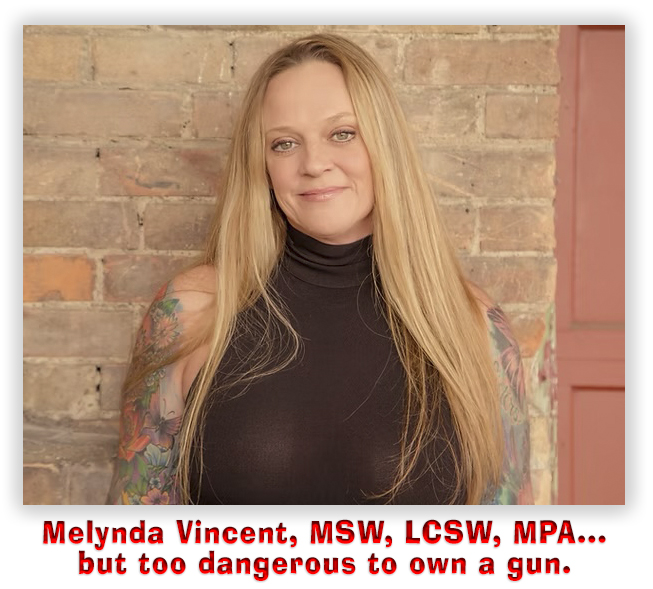 The Supreme Court last month denied certiorari to a dozen pending 18 USC § 922(g)(1) petitions for review filed by people who argued that the statute – which prohibits possession of guns by a variety of different classes of people from wife-beaters to dopers to ex-felons – violates the 2nd Amendment as applied to them. These included what I thought was the best felon-in-possession case before it, Vincent v. United States.
The Vincent petitioner had a felony bad-check charge from 15 years before, but had since beaten her substance abuse, obtained a master’s degree and opened her own substance abuse counseling clinic. The 10th Circuit held that § 922(g)(1) constitutionally prevented her from owning a gun. After multiple relistings, SCOTUS decided it would not use Vincent to address the limitations of § 922(g)(1).
Last week, SCOTUSBlog reviewed the status of Supreme Court gun litigation. With respect to § 922(g)(1), it noted that “Justice Amy Coney Barrett is already on record opining that § 922(g)(1) is unconstitutional as applied to individuals convicted of non-violent crimes. After all, the historical tradition recognized in Rahimi extends only to dangerous individuals.” Several lower courts have agreed.
There is a well-developed circuit split on the question. However, the justices seem to be opting to see how the lower courts decide cases in the wake of whatever guidance it will provide when it decides Hemani in the next 75 days.

The government has been selective about seeking SCOTUS review in the felon cases it has lost in the lower courts, such as largely limiting itself to decisions involving drug use (most likely to be affected by the decision in Hemani). The United States has also argued that the court should await the results of a DOJ rulemaking to provide a process for ex-felons – such as President Trump – to win back their gun rights. But 2nd Amendment advocates argue that § 922(g)(1) is unconstitutional as applied to nondangerous felons, and a program that bestows gun rights on people the government deems deserving turns a constitutional right into a privilege.
 Two weeks ago, the 7th Circuit ruled in two separate cases that 18 USC § 922(g)(1) was not unconstitutional on its face or as applied to a defendant. The Court cited a long list of cases from other circuits finding § 922(g) was consistent with the 2nd Amendment, and said, “It is enough to cite the decisions we have mentioned, plus United States v. Watson, which is being released contemporaneously. Watson and the decisions in other circuits say all that is necessary. As in Watson, we reserve decision on as-applied challenges by persons whose felony convictions do not suggest that firearms would be dangerous in their hands. Some courts of appeals allow such challenges; some do not; in this circuit the issue is open. For a person such as Prince, however, once the general validity of § 922(g)(1) has been established, there is nothing more to say.”
SCOTUSBlog, The who, what, and where of gun control (April 7, 2026)
United States v. Hemani, Case No. 24-1234 (argued March 2, 2026)
United States v. Prince, Case No. 23-3155, 2026 U.S.App. LEXIS 9596 (7th Cir. April 2, 2026)
United States v. Watson, Case No. 24-2432, 2026 U.S.App. LEXIS 9597 (7th Cir. April 2, 2026)
~ Thomas L. Root
-
-
AuthorPosts
- You must be logged in to reply to this topic.