John D. Kirby: A Federal Defense Practice Built on Prosecution-Side Experience
From the U.S. Attorney's Office to the Supreme Court to the defense table — the arc of a career that reshapes how you think about federal criminal defense.
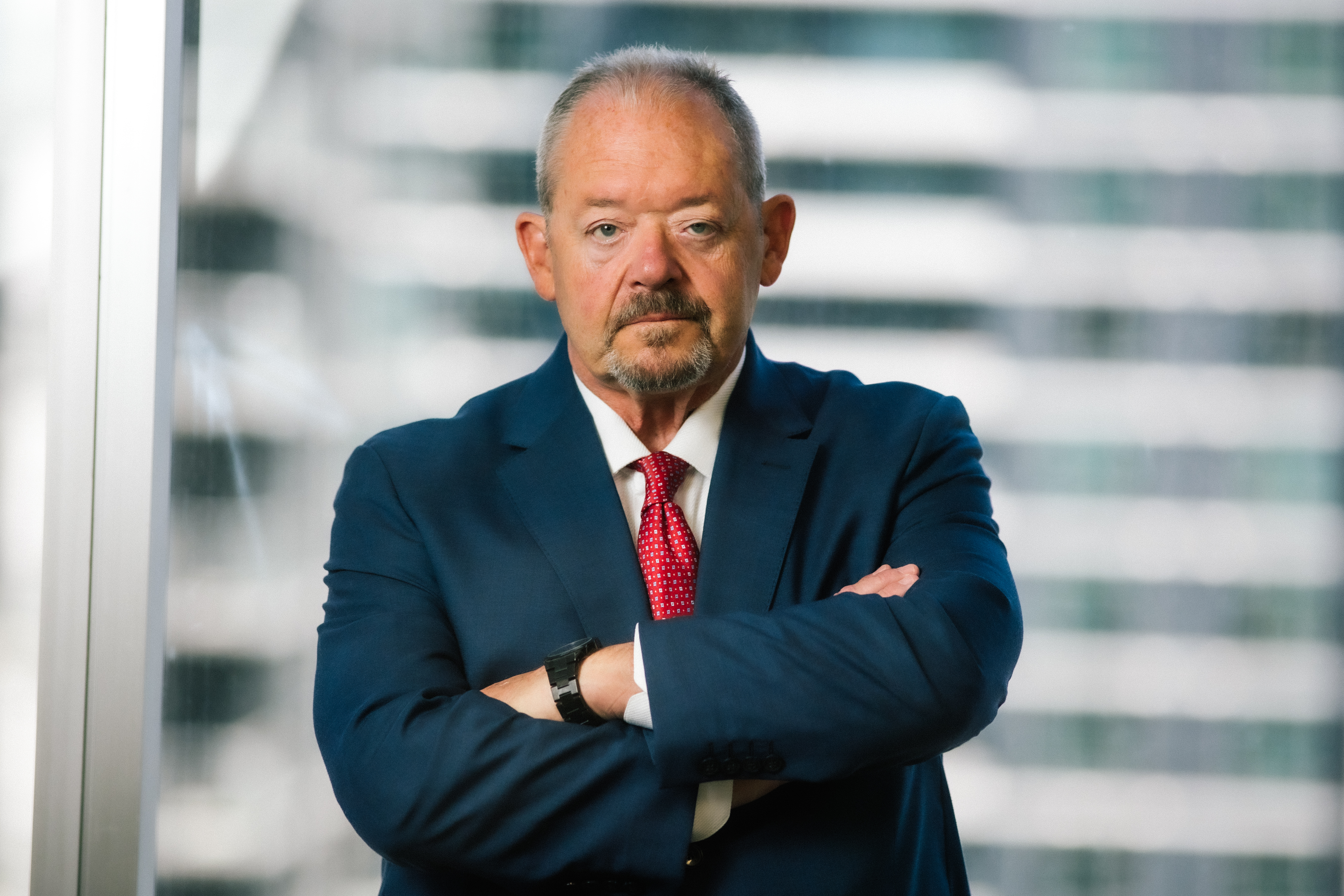
John D. Kirby has seen the inside of a federal criminal case from every angle that matters. He spent more than a decade as a federal prosecutor in the Southern District of California, handling everything from drug conspiracy indictments to complex white-collar fraud investigations. He knows, with precision that can only come from having done the job, exactly how a federal prosecutor builds a case — because he built them himself.
That prosecution-side experience is the foundation of his defense practice. When a client walks into his office facing a federal indictment, Kirby does not have to guess what the AUSA is thinking. He knows. He knows how the grand jury presentation was structured. He knows which witnesses the government will call and in what order. He knows what the prosecutor needs to prove — and, more importantly, what the prosecutor is most afraid the defense will expose.
"The difference between a prosecutor who became a defense attorney and a career defense attorney," Kirby has said, "is that the former prosecutor doesn't have to imagine the government's strategy. He's executed it."
That experience took him to the Supreme Court of the United States, where he argued Inyo County v. Paiute-Shoshone Indians, 538 U.S. 701 (2003) — a case addressing tribal sovereign immunity and the scope of state investigative power, decided unanimously by the Court. Justice Ginsburg wrote the majority opinion; Justice Stevens concurred in the judgment. The argument transcript is a master class in addressing a bench that is simultaneously interested in doctrinal coherence and practical consequences.
While at Cornell Law School — from which he graduated with honors after completing his undergraduate degree at Cornell University — Kirby published "Qualified Immunity for Civil Rights Violations: Refining the Standard" in the Cornell Law Review. 75 Cornell L. Rev. 461 (1990). The note proposed a functional refinement of the qualified immunity "clearly established law" standard — a proposal that has been cited with increasing frequency in the current qualified immunity reform debate and that has influenced pattern jury instructions in the Seventh Circuit.
Kirby is admitted to practice in Arizona, California, and the federal courts of the United States. His practice focuses on federal criminal defense, including grand jury investigations, jury trials, sentencing advocacy, direct appeals, and collateral relief under 28 U.S.C. § 2255.
The authorities behind this article
- Inyo County v. Paiute-Shoshone Indians, 538 U.S. 701 (2003)
The unanimous decision in the case Kirby argued before the Supreme Court.
- Supreme Court docket, No. 02-281
The Court's docket entries for the Inyo County case Kirby argued.
- 28 U.S.C. § 2255
The collateral-relief statute referenced in Kirby's practice focus.
FedKite Editorial Board
The FedKite Editorial Board.
Keep Reading
D.C. Judge Orders Bureau of Prisons to Respond in Long-Running NACDL Records Case
D.C. Judge Orders Bureau of Prisons to Respond in Long-Running NACDL Records Case A federal judge in Washington has issued a memorandum opinion and order in the National Association of Criminal Defen
DOJ Bets Big on Prediction Markets, and Kalshi's Legal Fight Just Got Bigger
DOJ Bets Big on Prediction Markets, and Kalshi's Legal Fight Just Got Bigger The Justice Department has thrown its weight behind prediction-market platforms in one of the most closely watched regulat

The Legal Professional's Home Office: 11 Essentials for the Home Practice
From the bankers lamp that sets the tone to the leather portfolio that ages like a Burgundy — what to buy for the home practice in 2026.