- This topic is empty.
-
AuthorPosts
-
-
February 21, 2026 at 3:14 am #11519
Kris Marker
KeymasterWe post news and comment on federal criminal justice issues, focused primarily on trial and post-conviction matters, legislative initiatives, and sentencing issues.

11TH CIRCUIT GIVES BOWE ANOTHER ARROW
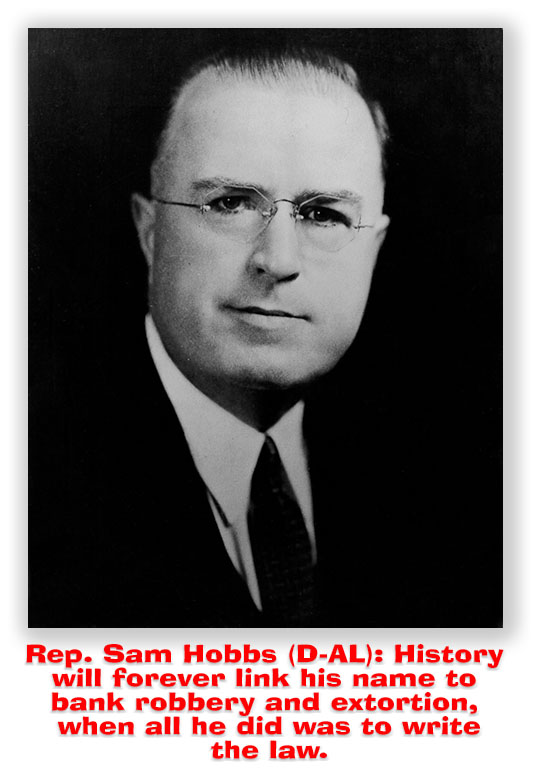 You may remember that a month ago, Michael Bowe – convicted 10 years ago of conspiracy to commit a Hobbs Act robbery, attempted Hobbs Act robbery, and using a gun during the offenses in violation of 18 USC § 924 – won his Supreme Court case. On January 12, 2026, SCOTUS ruled that while 28 USC § 2244 provides that a denial of authorization “to file a second or successive application” shall not be subject to Supreme Court review, the limitation does not apply to federal prisoners. The Supremes said the limitation is housed within 28 USC § 2244, “which imposes several strict requirements that apply only to state prisoners.” What’s more, subsection 2244(b)(3)(E) addresses only “second or successive application’ but “unlike state prisoners who file such ‘applications,’ federal prisoners file ‘motions.”
Mike filed and lost a § 2255 motion in 2016, arguing that Johnson v. United States, which invalidated the residual clause in the Armed Career Criminal Act (18 USC § 924(e)), also invalidated his § 924(c) conviction. He lost. He filed a second § 2255 motion in 2019, after United States v. Davis held that conspiracy to commit a vviolent crime was not itself a violent crime. He lost again, because while Davis announced a new, retroactive constitutional rule, Mike’s attempted Hobbs Act robbery conviction was still a crime of violence.
After United States v. Taylor held in 2022 that attempted Hobbs Act robbery was not a crime of violence, Mike once again asked the 11th Circuit for authorization under § 2255(h), arguing that Davis and Taylor leave none of his convictions as valid predicates for a § 924(c) charge. The Circuit dismissed the part of his request resting on Davis, reasoning that the claim had been “presented in a prior application” and that the panel lacked jurisdiction over such old claims under § 2244(b)(1) – a statute that on its face applies to state prisoners seeking leave to file a second 28 USC § 2254 petition in federal court but has ambiguously been applied by federal appeals courts to federal § 2255 movants as well.
The Supreme Court reversed, holding that § 2244(b)(1)’s old-claim bar – that states that “[a] claim presented in a second or successive habeas corpus application under § 2254 that was presented in a prior application shall be dismissed” – applies only to state prisoners.
 Last week, the 11th ruled that Mike could go forward with a new § 2255 motion. “Based on Taylor and the 11th Circuit’s Brown v. United States decision, Bowe contends that neither of his predicate offenses — conspiracy to commit Hobbs Act robbery (Count 1) and attempted Hobbs Act robbery (Count 2) — can now quality as a ‘crime of violence’ that would support his § 924(c)(1)(A) conviction (Count 3) for using, brandishing, or discharging a firearm during a crime of violence,” the 11th said.
 Bowe has made a prima facie showing that he meets the statutory criteria in § 2255(h)(2)… But a prima facie showing case is not a final showing entitling an applicant to relief. A prima facie showing is only the necessary first step. He still has to show the district court that he is entitled to the relief he seeks. As we have explained: “Things are different in the district court. That court has the benefit of submissions from both sides, has access to the record, has an opportunity to inquire into the evidence, and usually has time to make and explain a decision about whether the petitioner’s claim truly does meet the § 2244(b) requirements. The statute puts on the district court the duty to make the initial decision about whether the petitioner meets the § 2244(b) requirements—not whether he has made out a prima facie case for meeting them, but whether he actually meets them…”
In re Bowe, Case No. 24-11704, 2026 U.S. App. LEXIS 3876 (11th Cir. February 6, 2026)
Brown v. United States, 942 F.3d 1069 (11th Cir. 2019)
United States v. Taylor, 596 U.S. 845 (2022)
United States v. Davis, 588 U.S. 445 (2019)
Bowe v. United States, Case No. 24-5438, 2026 U.S. LEXIS 4 (January 9, 2026)
~ Thomas L. Root
-
-
AuthorPosts
- You must be logged in to reply to this topic.