- This topic is empty.
-
AuthorPosts
-
-
February 26, 2026 at 3:14 am #11548
Kris Marker
KeymasterWe post news and comment on federal criminal justice issues, focused primarily on trial and post-conviction matters, legislative initiatives, and sentencing issues.

BOP SHORT STAFFING WAS A HOT TOPIC LAST WEEK
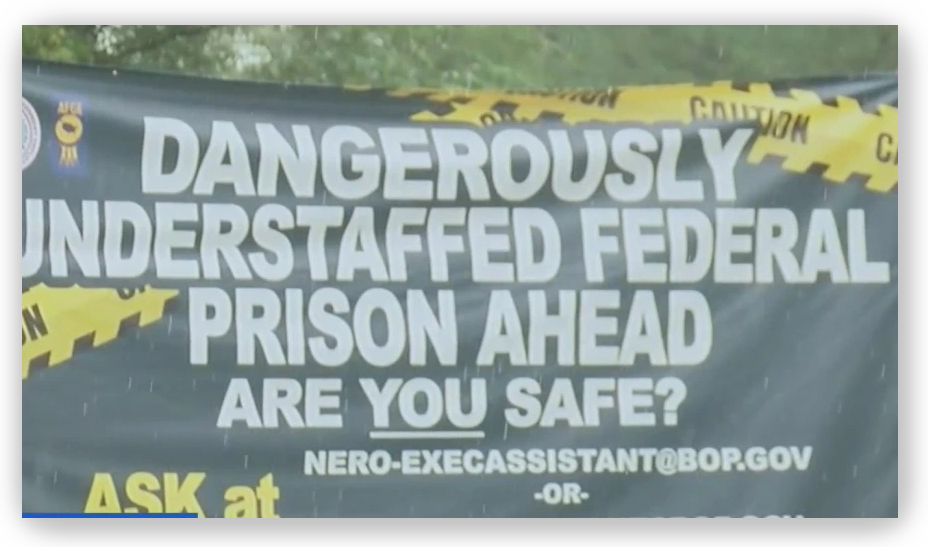 In a finding that rivals Newton’s conclusion that gravity makes apples fall to the ground, a Congressional Research Service report last week determined that non-competitive pay and difficult working conditions are main causes of longstanding understaffing at the Bureau of Prisons, a problem that has persisted despite paying recruitment and retention incentives, using shortcut “direct hire” authority, and promising student loan repayments for employees.
The BOP had always run vacancy rates in the 10-12% range, but that jumped to the 17-18% range over 2018-2021, and then again to the 22-25% range after the pandemic. Over the six years ending in 2002, overtime costs more than doubled to $275 million even while the number of correctional officers fell 22% from about 19,000 to about 15,600.
“There are questions about whether pay for federal COs is competitive with other federal law enforcement agencies and the private sector,” the report said. “Candidates for CO positions who have college degrees might also consider seeking entry-level law enforcement officer positions for which they qualify with other federal agencies, which might pay more.”
The differences have grown greater recently, CRS said, as agencies – including CBP and ICE – have offered larger incentives while the BOP has “paused offering new recruitment incentives and have ended some retention incentives due to budgetary constraints.”
Last Friday, Democrats on the House Judiciary Committee demanded details on BOP plans to address these “major and long-time staffing shortages,” Federal News Network reported.
In a letter sent to BOP Director William K. Marshall III from top Democrats on the House Judiciary Committee warned that workforce issues have reached a “crisis point,” leading to operational challenges and unsafe conditions in the federal prison system.
“By far, the most significant challenge to BOP’s ability to fulfill its public safety mission is its pervasive shortage of critical staff — particularly of correctional officers, healthcare professionals and mental health specialists,” the letter stated.
While the BOP inmate population fell slightly last year, “it still exceeds BOP’s capacity,” the letter asserted. “Moreover, any population reduction likely is offset by the influx of thousands of immigrant detainees BOP agreed to accept. Despite the obvious need to retain its workforce, in March 2025, BOP cut pay to frontline officers by as much as 25% [and] institute[ed] a hiring freeze in May 2025.”
 Although the BOP received $3 billion in additional funding in last summer’s One Big Beautiful Bill, “it appears that BOP only recently posted open correctional officer positions to the public. Further, reporting revealed that the Bureau has lost more than 1,400 staff members as a result of heavy recruitment for positions that come with generous salaries and signing bonuses from Immigration and Customs Enforcement (ICE). One BOP official told ProPublica, “We’re broken and we’re being poached by ICE.”
The letter asks the BOP to report the efforts it has undertaken to attract and recruit qualified candidates and retain current employees. The Democrats are especially interested in the number of BOP COs lost to higher-paying ICE jobs.
Unsurprisingly, BOP employee unions last week endorsed H.R. 7033, the bipartisan Federal Correctional Officer Paycheck Protection Act of 2026 introduced last month. The bill aims to boost BOP staff recruitment and retention by raising pay for BOP employees working in custodial settings with direct inmate contact by up to 35%.
Sam Metcalf, president of AFGE Local 0701, told Corrections1 last week that higher pay is needed to reduce the heavy use of augmentation — a practice in which non-custody staff are reassigned to cover correctional officer posts.
FEDWeek, Report Lays Out Causes, Effects of Bureau Understaffing (February 19, 2026)
Federal News Network, House Democrats Press Bureau of Prisons leadership on staffing ‘crisis’ (February 20, 2026)
Letter from Jamie Raskin to William K. Marshall III, February 20, 2026
HR 7033, Federal Correctional Officer Paycheck Protection Act of 2026
Corrections1, Union backs bill proposing 35 pct base pay increase for federal correctional officers (February 20, 2026)
~ Thomas L. Root
-
-
AuthorPosts
- You must be logged in to reply to this topic.